

Fall is the best time to seed a lawn, but there are times when seeding in the spring is necessary. I’ve found it’s a great way to address bare patches that appeared over the winter or to catch up on overseeding if I missed the fall seeding window. But while spring seeding can be very effective, it also faces challenges. Timing your spring seeding is crucial if you want your seedlings to mature enough to survive the summer heat. Just as important is following the right process when it’s time to seed. Do it wrong, and you’re just wasting your money on expensive grass seed and blowing a weekend planting it.
Step 1: Mow Low
Before I crack open a bag of seed, I mow my grass down to a 2 inch height. Doing so allows the seed to more easily drop down through the blades of the grass to the soil, which is where it needs to be to germinate and take root. Mowing the grass to a low height also stunts the existing turf a bit, which allows the new seeds to get the sunlight they need to germinate. I always bag my clippings for this mow to reduce the amount of debris the seeds have to fight through to reach the soil.
Related: What Is Dormant Grass Seeding?
Step 2: Prep the soil
How I prep the soil for seed depends on whether I’m fixing bare patches or overseeding the entire lawn:
- Patches: if I’m patching bare areas on the lawn, I use a metal rake to loosen up the soil in those spots then amend it with a little topsoil. My goal is to remove thatch and debris while breaking up a 1/8 to 1/4 inch deep layer of soil.
- Full Lawn Overseeding: Using a metal rake to break up the lawn just isn’t practical for overseeding an entire lawn. Instead, I spring for a core aerator rental, or, if it’s in the budget, I’ll hire a service to aerate. Core aerators remove a 3-inch plug of soil, simultaneously creating a hole that seed can drop into for optimal seed to soil contact. Core aerators don’t just help your new seed, they also improve air and water flow to the roots of existing grass. Renting a plug aerator is an added expense, but the germination rates you’ll get from aerating versus raking simply don’t compare.
- Skip the Preemergent: Spring is traditionally when I lay down a preemergent to kill off any germinated weed seeds, including crabgrass, foxtail, and chickweed. Most preemergent isn’t selective though. It will kill off new grass seed along with those weed seeds. In fact, once you lay down a preemergent, you can forget about seeding for about four months. If I’m planting new seed or overseeding in the spring, I skip the spring preemergent treatment.
Pro Tip: I highly recommend jump starting your overseeding efforts by adding a starter fertilizer either just before or just after you lay your seed. Starter fertilizer is high in phosphorus, which boosts root growth for young seedlings. Plus, it includes mesotrione, which is a selective preemergent that will take out broadleaf weeds without hurting the new seeds or existing turf.
Getty IMa
Step 3: Spread the Seed
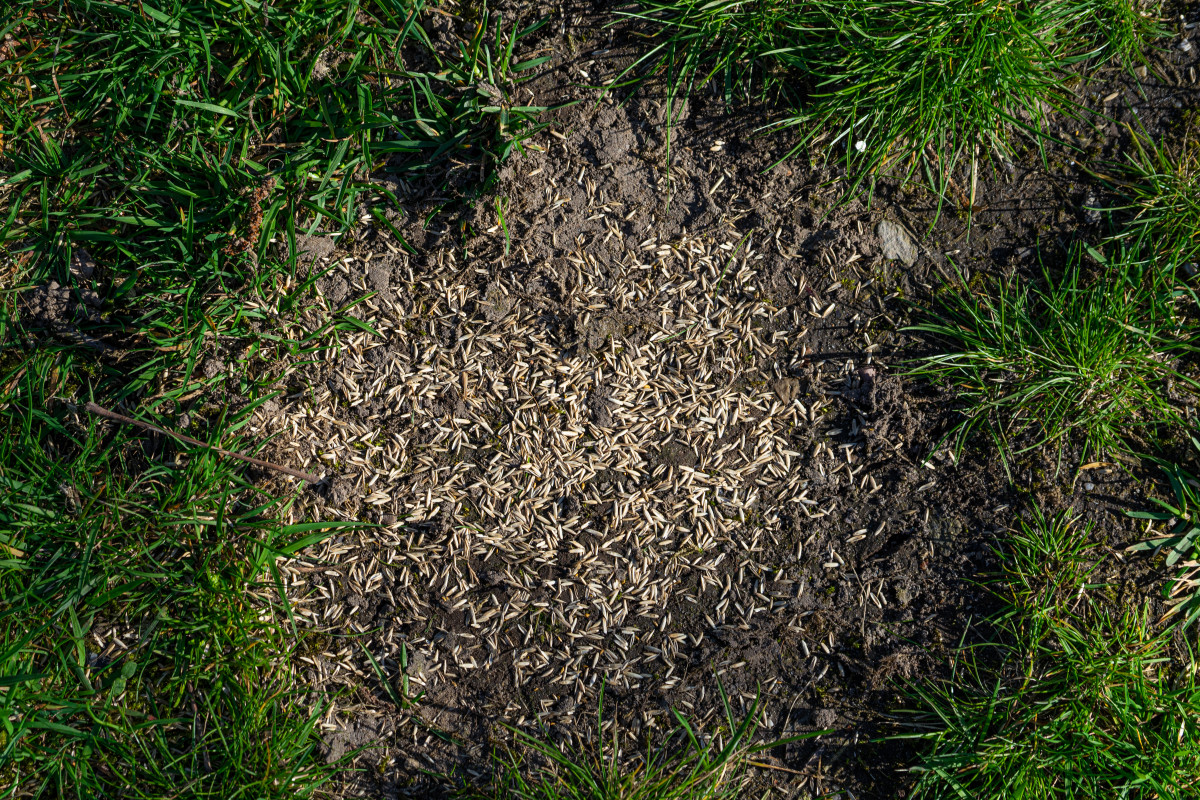
Use a drop spreader or broadcast spreader to drop seeds. The latter allows for more precise spreading, making it the best choice for working around a lot of landscaping and walkways on which you don’t want to spread seed. Broadcast spreaders allow you to cover a larger area fast.
Check the overseeding rate on the bag and set your spreader accordingly. If there are no settings on the seed bag, then I set my spreader to a low rate, which is about 20 percent open. I typically make passes over the lawn in two to three different directions for the best coverage.
Pro Tip: If it’s in the budget, I recommend renting a power overseeder. These machines drop seeds into small grooves that it cuts into the soil, maximizing that critical seed to soil contact that’s necessary for getting good germination results. Go in with a neighbor on a rental to lower the cost.
Related: I Use This Simple Test to Tell if My Lawn is Dead or Dormant
Step 4: Water the Seed
Watering the seed the right way is key to getting the best results. I follow the 10-10-10 rule– water three times a day for 10 minutes each. This puts moisture into the soil without washing away the seeds. There should never be any puddles in your lawn. If there are, you’re watering for too long.
Once the seedlings germinate, I drop my watering back to once or twice daily. By keeping the soil surface dryer, it encourages the roots to grow deeper in search of moisture. By week four, move to a traditional summer watering schedule of every other day (adjusting for rainfall).
| Phase | Frequency | Duration | Goal |
|---|---|---|---|
|
Week 1–2 (Pre-Germination) |
3x Daily |
10 Minutes |
Keep seeds moist; avoid puddles. |
|
Week 3 (New Seedlings) |
1–2x Daily |
10–15 Minutes |
Encourage roots to begin searching deeper. |
|
Week 4+ (Established) |
Every Other Day |
20–30 Minutes |
Transition to traditional summer schedule. |
Pro Tip: Water in the morning to avoid evaporation and avoid watering in the late afternoon or evening to prevent the soil from staying wet overnight, which can lead to mold growth.
Step 5: Mow frequently
Once the seedlings germinate, I mow my lawn to a height of 1.5 inches so it doesn’t have to compete as much with the existing grass. After a couple of cuts, raise the deck in 1/2 inch intervals over a period of three weeks until you reach the nominal height for cool season grasses, which is 2.5 to 3.5 inches.
from Men's Journal https://ift.tt/hEDycL7
via IFTTT